
Thursday, December 30, 2010

11 Bright Ideas for 2011
Free website - Powered By Wix.com
Several days ago, I asked my readers to contribute their favorite web tools to use for Instruction, and these websites made the cut! Here are 11 different web tools to use with your students either to engage and motivate, to provide alternative forms of assessment, or just to have fun with learning!
Here's to the most DIGIGOGICAL 2011 possible!
· Animoto - Animoto.com is a web application that creates MTV-style videos with the click of a button. It represents the end of slideshows as you know them!
· Diigo – The web’s premier bookmarking, annotating, and social service, all rolled into one!
· Dropbox - Dropbox allows you to sync your files online and across your computers automatically. Access your files anywhere, anytime, even on your mobile device!
· Edmodo - Edmodo is a social learning network for teachers, students, schools and districts.
· Glogster - Glogster EDU Premium is a collaborative online learning platform for teachers and students to express their creativity, knowledge, ideas and skills in the classroom.
· LiveBinders - "Think of Livebinders as a virtual 3 ring binder that you can put pretty much anything in. Webpage, PDF, image, video, text: they all can go into a page organized for you. Each item can be on it’s own tab or you can further organize by using sub-tabs. You can even put LiveBinders inside LiveBinders inside LiveBinders!!"
-- Melissa Edwards - The Inspired Classroom
· Prezi - Create astonishing presentations live and on the web
· Skype – Chat, Audio chat, Video Chat, Call Phones, Send Files, Share your computer Screen, share links and more with this incredible service. Connect to people all over the world!
· Storybird - Storybirds are short, art-inspired stories you make to share, read, and print. Read them like books, play them like games, and send them like greeting cards. They’re curiously fun.
· WallWisher – An online corkboard! Collaboratively collect notes, pictures, links, etc. Add items the way you would add a Post-It Note to a message board!
· xTraNormal – If you can type, you can make movies! (xTraNormal State is free, and new users to the web version get 300 xpoints to make movies with!)
Wednesday, December 29, 2010
Tuesday, December 28, 2010
Monday, December 27, 2010
Sunday, December 26, 2010
DIGIGOGY End of Year CONTEST!
I'm giving away 5 of the brand new DIGIGOGY 2011 Calendar Magnets to random respondents to the survey.
1 Winner will get the Traveler Media Sleeve I got at a recent conference. The sleeve pictured is an example of what it looks like, but the screen printing on the one I have reads NYSCATE and Skills Tutor, as they were the vendors that sponsored the bags! These sleeves would be great for an iPad, digital tablet, or netBook computer. If you want to be considered for the contest, please leave your email address in the survey.

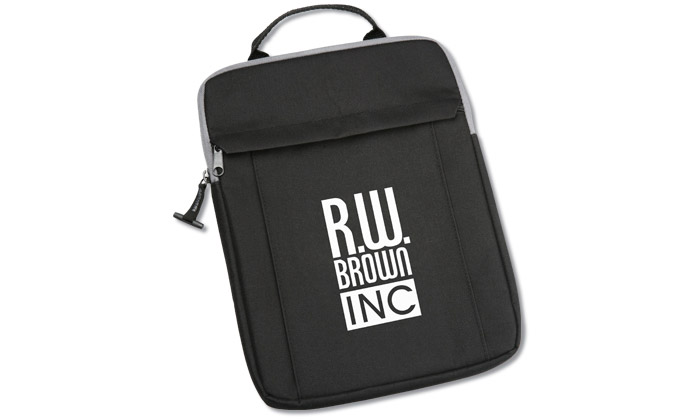
*Contest ends on Tuesday, December 28th at 10:00 PM EST
Friday, December 24, 2010
Thursday, December 23, 2010
Wednesday, December 22, 2010
Tuesday, December 21, 2010
New Web Stuff 12/22/2010
-
Arkansas SSSD Curriculum / Common Core State Standards (CCSS)
-
Crosswalk English Language Arts [Delaware Department of Education]
-
MCAS Common Core Crosswalk, Common core content mapping high school
-
http://7thhistory.ranchostarbuck.org/districtnews/assets/CCCS%20preso%20Board%2012-6-10.pdf
-
Common Core State Standards - Mathematics Crosswalk - Oregon Department of Education
-
Common Course Standards Initiative - South Dakota Department of Education
-
Crosswalk - Common Core State Standards (CCSS) Comparison to Kentucky State Standards
Monday, December 20, 2010
Common CoreZilla: Shrink The Change!

Did you see Jurassic Park 2? There's a scene that pays homage to the old Japanese Godzilla movies where the Tyrannosaur escapes and runs down the street, with the people looking back, running away in terror.
For a lot of educators, I think the Common Core Standards and the state-specific implementation plans are a lot like that Tyrannosaur.
There are a lot of things to consider, sure, but we need to think of "shrinking the change," using a phrase from the Dan & Chip Heath book, SWITCH. A handful of 2-inch tall T-Rex's are a lot easier to deal with than their 2-story originator.
So, how do you go about it?
First, you need to look at what you've already got going for you in your districts, in your schools, even down to the classroom level:
- Do you have curriculum models, frameworks, or maps in place that represent a child's journey through your system from K to 12?
- Do you have regular curricular conversation both horizontally and vertically?
- Do you prioritize based on essential skills and enduring or leveraged understandings?
- Do the teachers in your school(s) understand multiple ways to gather assessment data, and have "agreed-upon" formative checkpoints?
- Do you already have thematic units or genre specific models in place during the course of each grade levels curricular tracks?
- Do you provide supplemental guidance and resources for differentiated instruction, research based instructional strategies, and professional development for teachers, especially those that teach special education or English Language Learners?
Any of these could easily be their own initiatives and last for months and months...but we don't necessarily have the gift of unlimited implementation time. BUT, if you are already doing some of these things--then you can check them off your RTTT list, and just continue doing them.
Otherwise, you need to map out a plan of attack.
At the "core" of these is student learning. To begin with, make that your focus. Then, bit by bit, starting tackling each of these components:
- The curricular framework or map is very important. Not only does it provide opportunities for curricular conversation and consensus, it provides a roadmap of sorts that documents what we intend as well as a diary of what actually happened. It is meant to be fully transparent, and help teachers situate themselves in the context of their colleagues. Bena Kallick (author of several books on mapping and data) talks about this when she discusses "Evidences versus Claims." It's not enough anymore to SAY what we think--we need to prove it. Having an articulated framework that shows how content and skills are related to specific assessments, and further how that impacts instructional practice, methodologies, and activities helps to enhance everyone's professional practice and build capacity around everyone's growth--students AND teachers! There are many books to help you get started with this, choosing from some of the heavy hitters in the field: Heidi Hayes Jacobs, Janet Hale, and Susan Udelhofen, just to name a few.
- The next thing to look at, as far as the RTTT grant is concerned is multiple ways to assess students. What are you doing now? If it's all multiple choice, objective testing, you might want to expand things a little. Standardized objective tests are often at mid and high cognitive levels, while the tests that are used to "prepare" for those tests are often at lower cognitive levels. This means that you can give practice tests every single day and still not really be preparing your students for those standardized banes of education. The RTTT grant language is asking for instruction and assessment that is more formative in nature, those assessments that don't lead to a grade, but lead to proficiency. The development of Common Assessments that are formative in nature can be explored within these resources:
3. The last big hurdle is instructional strategies, with resources and examples. Here you go:
- Brain-based Learning: Eric Jensen's Website, David Sousa's Website, Google Search
- Fenwick English's book on Deep Curriculum Alignment
- Differentiated Instruction: Carol Ann Tomlinson, From ASCD, Cybrary Man's Differentiated Instruction Resources
- Understanding by Design by Wiggins and McTighe
- Classroom Instruction that Works by Robert Marzano
- Google any of the above for additional resources, but all educators should know about the above and how to implement the strategies and relate them to measurable student learning.
Yes, there is still much to be overwhelmed about. You don't want the Common CoreZilla to eat you alive!
Take it one step at a time. Look at what you're already doing, make a plan to integrate the parts of the puzzle you need to improve. Add those puzzle pieces one at a time. Pretty soon, the whole metaphor of the "Dinosaur" curriculum will cease to exist, except perhaps during the elementary field trip to the local Science museum...
photo: thiagors on sxc.hu, remixed by M.Fisher 2010
Wednesday, December 15, 2010
Tuesday, December 14, 2010
Saturday, December 11, 2010
Wednesday, December 8, 2010
Monday, December 6, 2010
Friday, December 3, 2010
Thursday, December 2, 2010
Subscribe to:
Posts (Atom)